Top HIP-3 Market Deployers by the Numbers
Compare eight HIP-3 deployers by trading volume, market focus, and current status as of Nov 2026.


HIP-3 lets teams create their own perpetual markets on Hyperliquid.
Some focus on stocks and commodities. Others offer crypto indices, interest rates or exposure to private-company valuations. The trading infrastructure is shared, but the markets—and the teams responsible for them—are different.
Across the eight deployer groups tracked by Flowscan, the dashboard recorded $237.84 billion in 90-day trading volume and $762.41 billion in all-time volume on 16 November 2026.
TradeXYZ accounted for most of that activity, but volume alone does not explain what each deployer brings to the ecosystem.
This article compares their numbers, market focus and current status. HyENA, Dreamcash’s CASH deployment and Felix’s FLX deployment have shut down their HIP-3 markets and are no longer competing as active HIP-3 deployers. Ventuals’ recorded deployment is also delisted.
They remain in this comparison for their historical activity—not as markets available to trade.
What is a HIP-3 market deployer?
A HIP-3 deployer creates and operates perpetual markets using Hyperliquid's HyperCore infrastructure. The deployer defines the contracts, supplies oracle prices, sets leverage limits and can settle markets when necessary. HyperCore provides the underlying order books and trading infrastructure.
The deployer is not necessarily the app used to trade. An interface can offer markets created by several teams, so an app's total trading volume is not automatically the volume of its own HIP-3 deployment. For a separate look at the interface layer, see our study of Hyperliquid frontend traders.
HIP-3 deployers ranked by 90-day trading volume
Data snapshot: 16 November 2026. The figures below use Flowscan's 90D selection, covering daily records from 18 August through 16 November, including the partial current day—not 90 completed UTC days. Each deployer's 90D figure is the sum of its Flowscan daily records over those dates; together they match Flowscan's own 90D total. “All-time” means the history captured by Flowscan.
| Deployer | 90D volume | All-time volume | Collateral* | Status |
|---|---|---|---|---|
| TradeXYZ | $232.22B | $724.37B | USDC | Active |
| Entropy.io | $4.48B | $4.48B | USDC | Active |
| Markets by Kinetiq | $578.27M | $4.75B | USDC | Active (1 market) |
| Paragon | $492.68M | $733.89M | USDC | Active |
| HyENA | $64.80M | $4.28B | USDe | Closed |
| Dreamcash / CASH | $0 | $19.53B | USDT | Closed |
| Felix / FLX | $0 | $3.59B | USDH | Closed |
| Ventuals | $0 | $675.46M | USDH | Closed |
* Volumes and collateral labels follow Flowscan's grouping. Current deployment status was checked against Hyperliquid's public metadata and official notices. Kinetiq previously used USDH before redeploying with USDC. A sunset deployment does not necessarily mean the company's other products have closed.
#1: TradeXYZ: the broadest market selection in this comparison
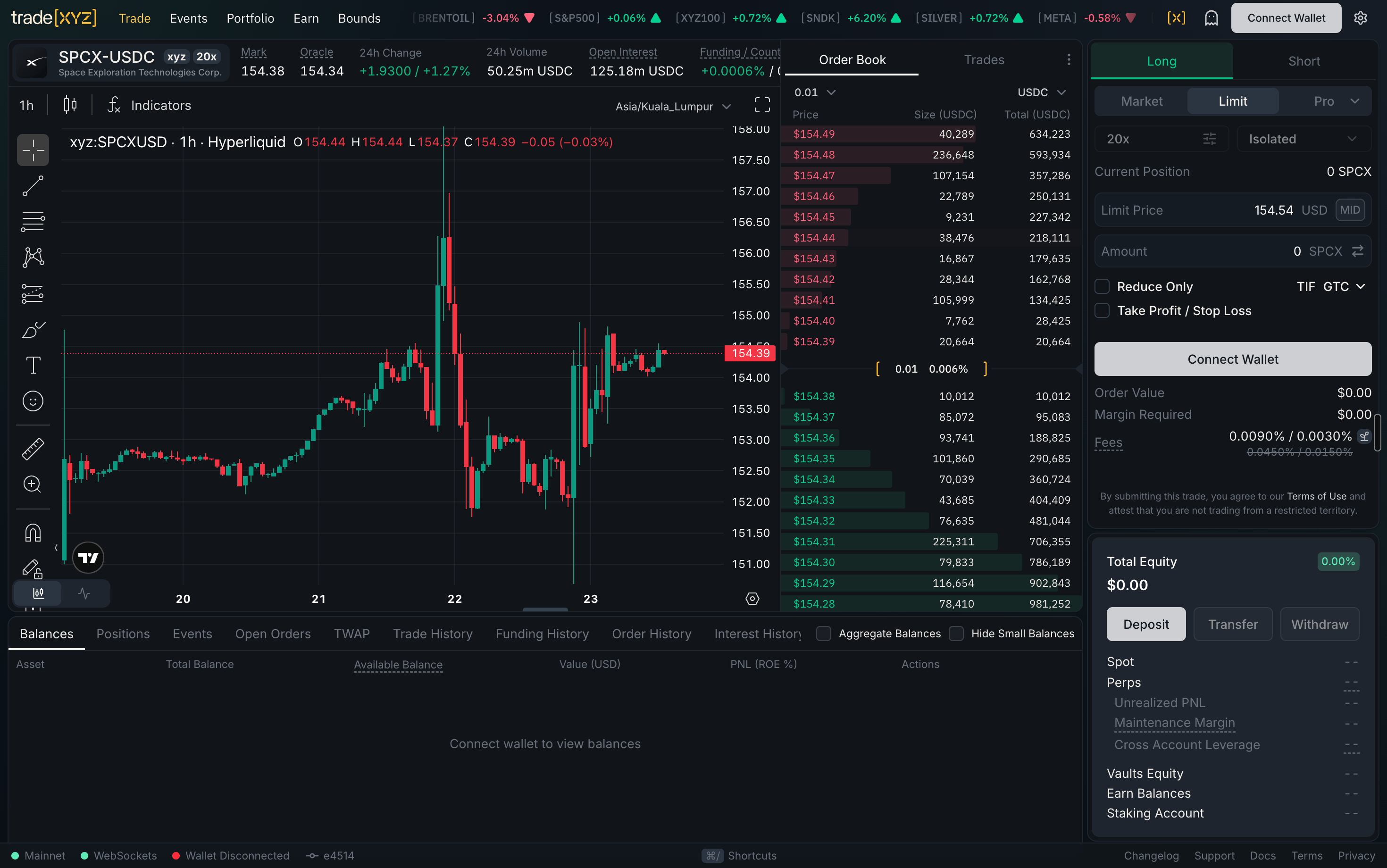
TradeXYZ spans equities, equity indices, commodities, currencies and pre-IPO exposure. Its USDC-settled markets include familiar names such as NVIDIA and Tesla alongside gold, silver and broader equity-market contracts.
Its defining difference is breadth combined with scale: traders can express views across several asset classes through one HIP-3 deployment. These perpetuals are separate from Trade[XYZ] Events, which is also covered in this article on top prediction market platforms on Hyperliquid.
#2: Entropy.io: private-company valuations alongside public equities
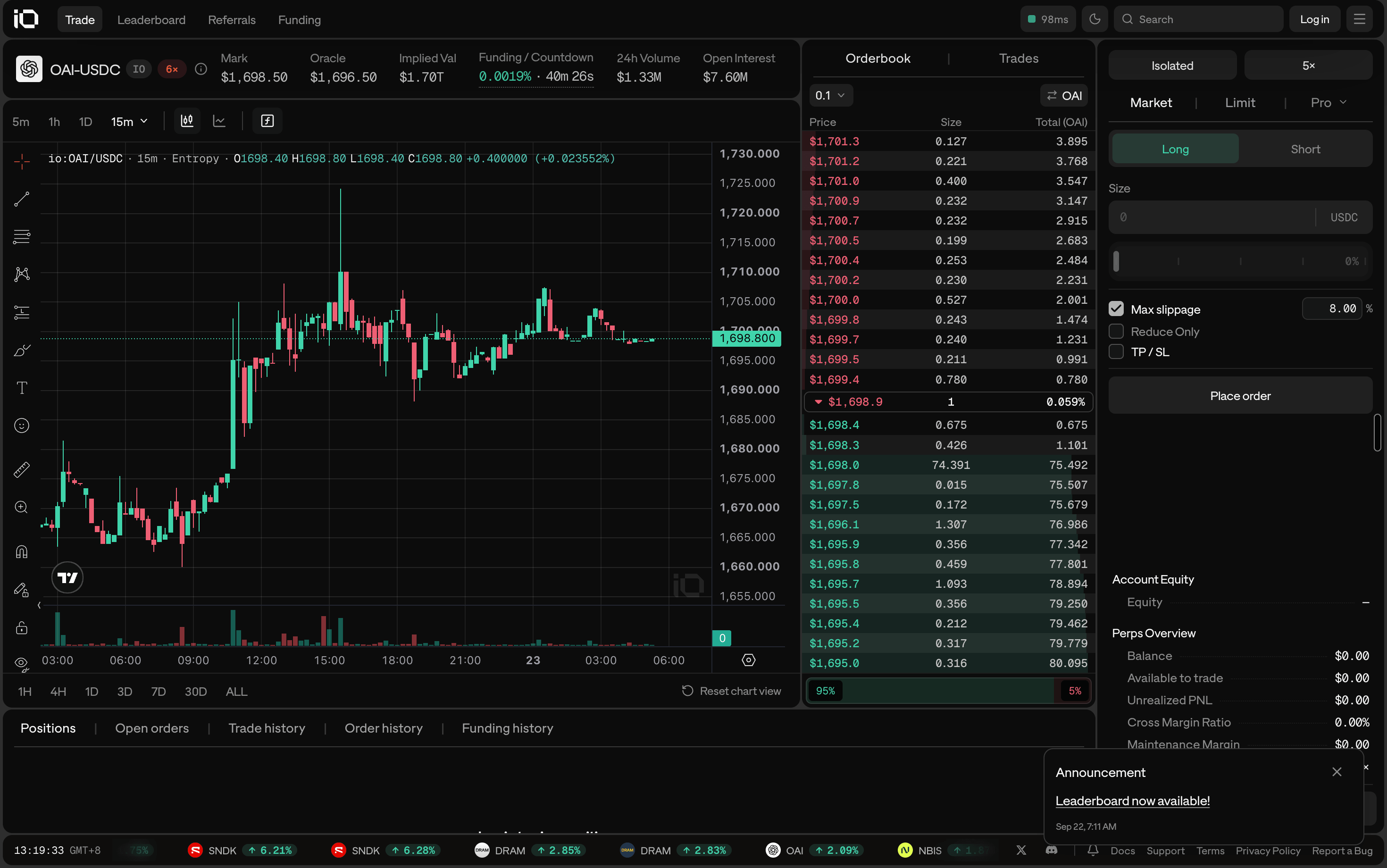
Entropy offering includes Anthropic and OpenAI valuation perpetuals. These provide exposure to a company's implied valuation—not ownership of its shares. Its listings also include public-equity markets such as SanDisk, Nebius and GoPro.
By the numbers: $4.48B in 90D volume and 15 currently listed markets. SanDisk was its largest market by recorded all-time volume, ahead of Anthropic.
That makes Entropy more than a pre-IPO venue. Hydromancer's analysis of the market reaction to Dario Amodei's essay examines how its private-company markets traded alongside TradeXYZ's public-equity markets.
#3: Markets by Kinetiq: from equity and bonds to Bitcoin volatility
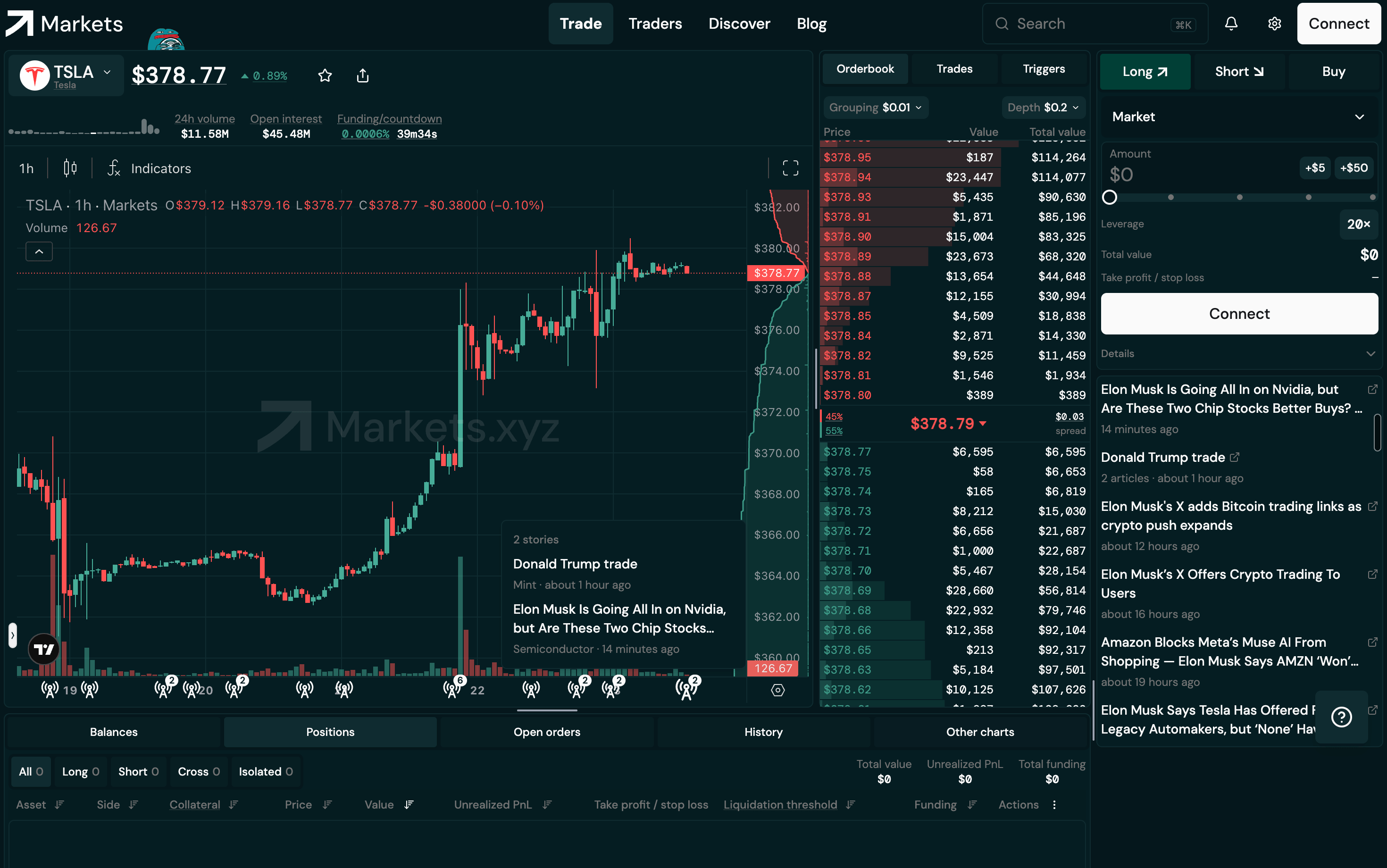
Markets.xyz’s deployment offered US500, USTECH, SMALL2000 and USBOND until the end of October 2026. These covered large-cap US equities, technology-heavy equity exposure, smaller US companies and long-duration Treasury bonds. On 21 October, Markets.xyz said it would sunset its short-tail HIP-3 offering in favor of a broader range of long-tail listings, and all four markets last traded on 29 October. The only market still live is BVIV, a perpetual on the Volmex Bitcoin Implied Volatility Index.
By the numbers: $578.27M in 90D volume and $4.75B in all-time volume under Flowscan's Kinetiq grouping. BVIV accounts for $11.96M of the 90D figure; the rest came from the four delisted markets.
One important change: Kinetiq redeployed from its USDH-based markets to a USDC-based deployment. Its documentation describes a wider catalogue, but only BVIV was listed on 16 November 2026.
#4: Paragon: crypto indices, equities and Treasury yields
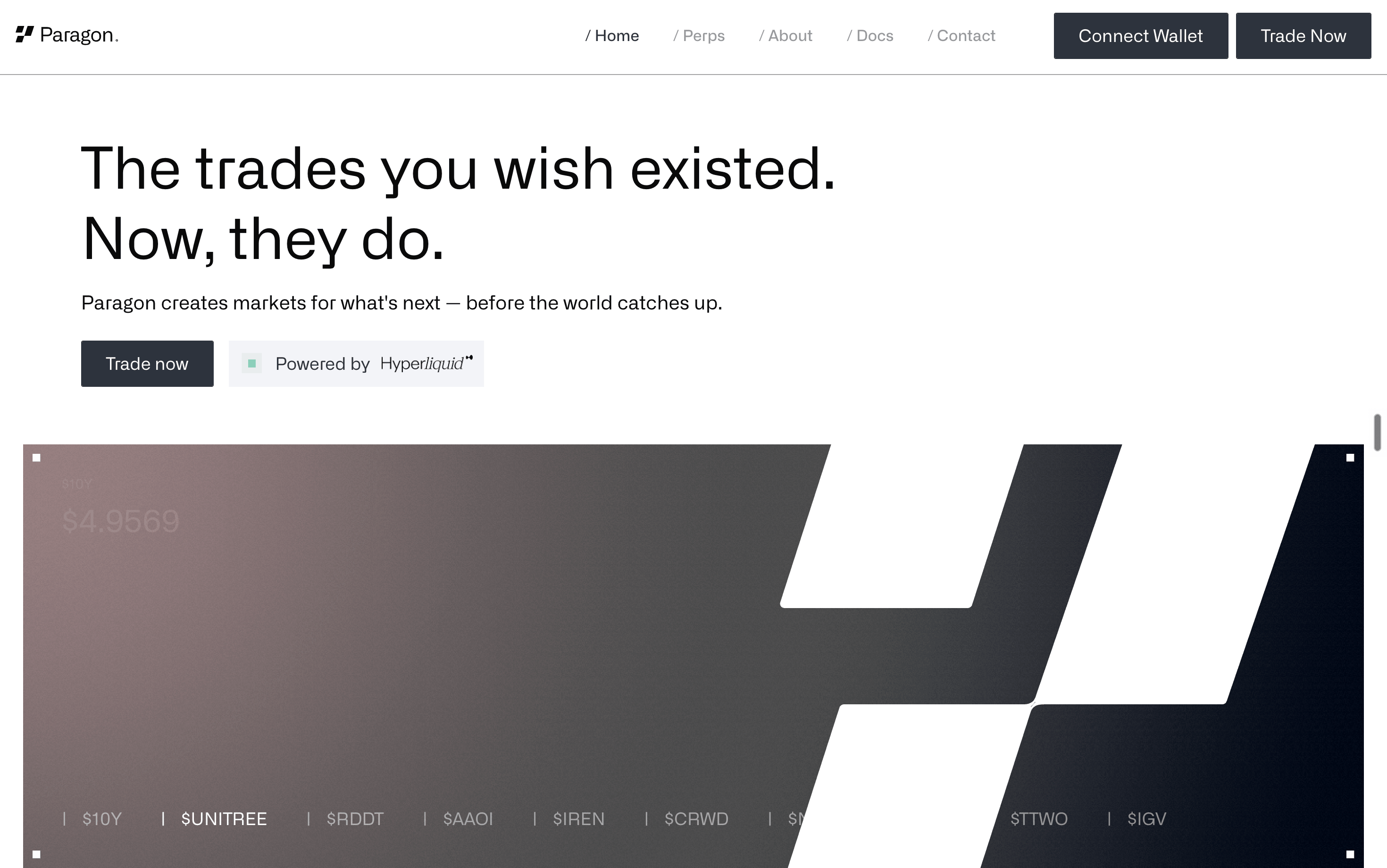
Paragon stands out for contracts such as BTC dominance, TOTAL2 and OTHERS. These let traders express views on crypto-market composition rather than just the price of a single coin. Its current selection also includes individual equities and 2-year, 10-year and 30-year US Treasury-yield contracts.
By the numbers: $492.68M in 90D volume and 33 currently listed markets.
The rates distinction matters: Paragon's 10Y contract tracks a yield, whereas Kinetiq's USBOND offered exposure to long-duration bond prices until it was delisted in October 2026. They are not interchangeable ways to trade interest rates.
Former HIP-3 competitors: historical volume, not active markets
The following deployments are no longer active competitors in this comparison. Their volume remains relevant to HIP-3’s history, but none had listed markets at the snapshot.
#5: HyENA: USDe HIP-3 markets
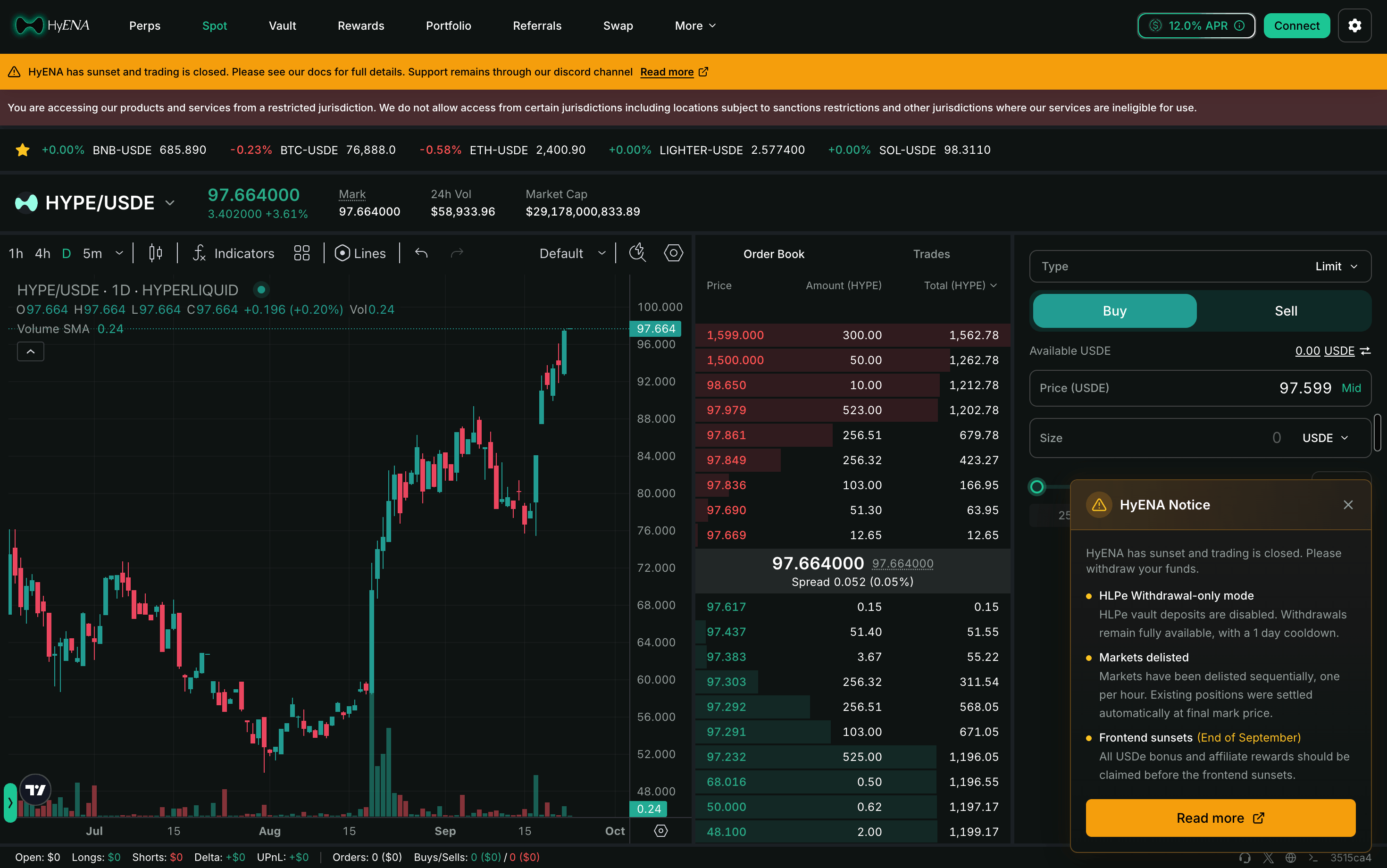
HyENA focused on crypto markets, including BTC, ETH, HYPE and SOL, using USDe collateral rather than USDC.
It recorded $64.80M in 90D volume and $4.28B all-time. HyENA announced its sunset on 28 August 2026, with market delistings scheduled for 31 August–2 September.
Its HIP-3 deployment is closed and no longer competing for trading activity. The trailing volume comes from trades before the closure.
Official announcement: Sunsetting HyENA.
— HyENA (@hyenatrade) August 28, 2026
#6: Dreamcash / CASH: USDT HIP-3 markets
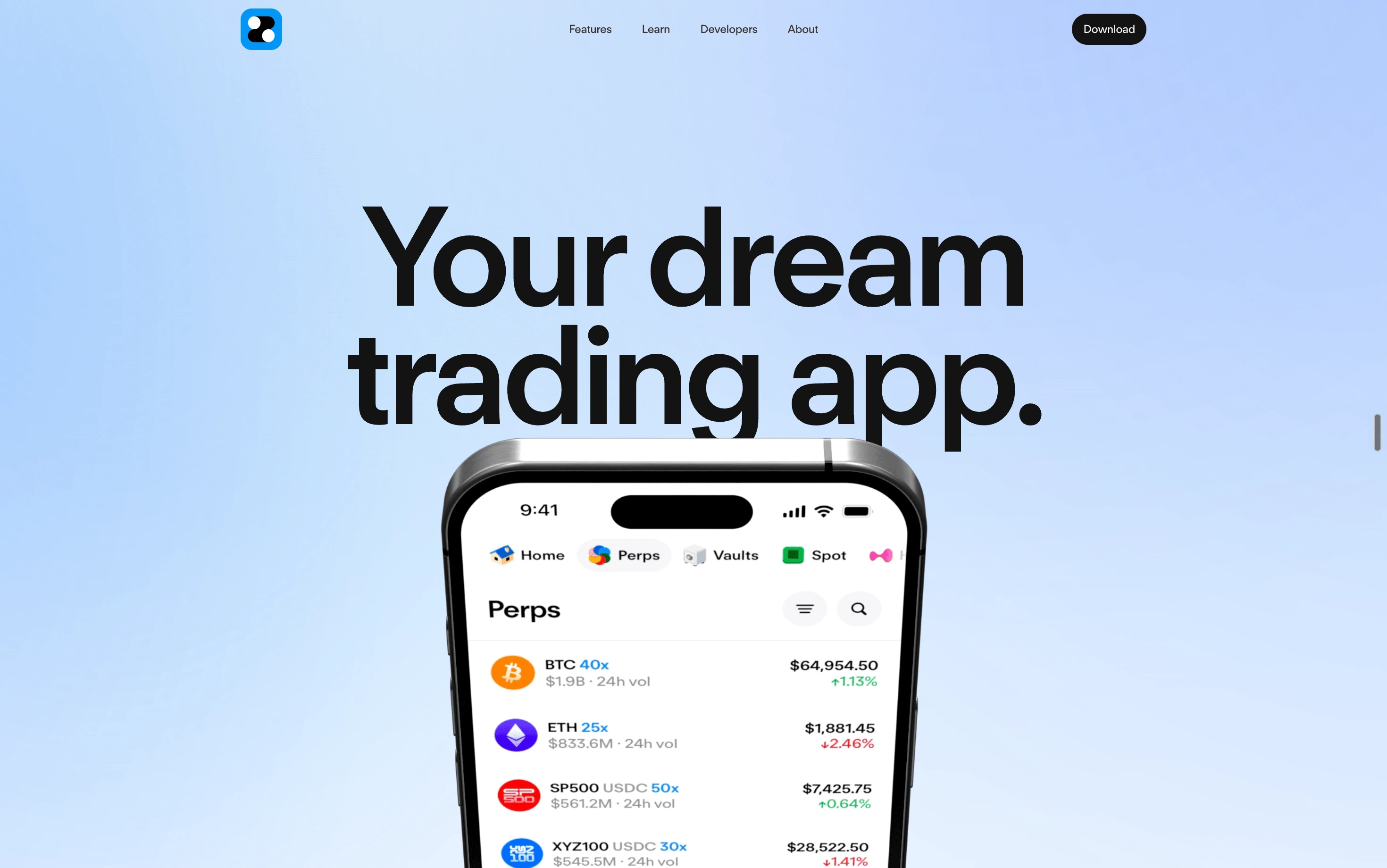
Dreamcash is a mobile trading interface; CASH was its own HIP-3 deployment. Its historical markets included US equities, broad equity exposure, gold, silver and oil.
CASH recorded $0 in this 90D window and $19.53B all-time. Dreamcash published its “CASH markets to sunset” announcement on 26 June 2026; the wind-down began on 30 June.
CASH is no longer an active HIP-3 competitor. This refers to Dreamcash’s own market deployment—not every market accessible through its app or the closure of the app itself.
Official announcement: CASH markets to sunset.
— Dreamcash (@Dreamcash) June 26, 2026
#7: Felix / FLX: USDH HIP-3 markets
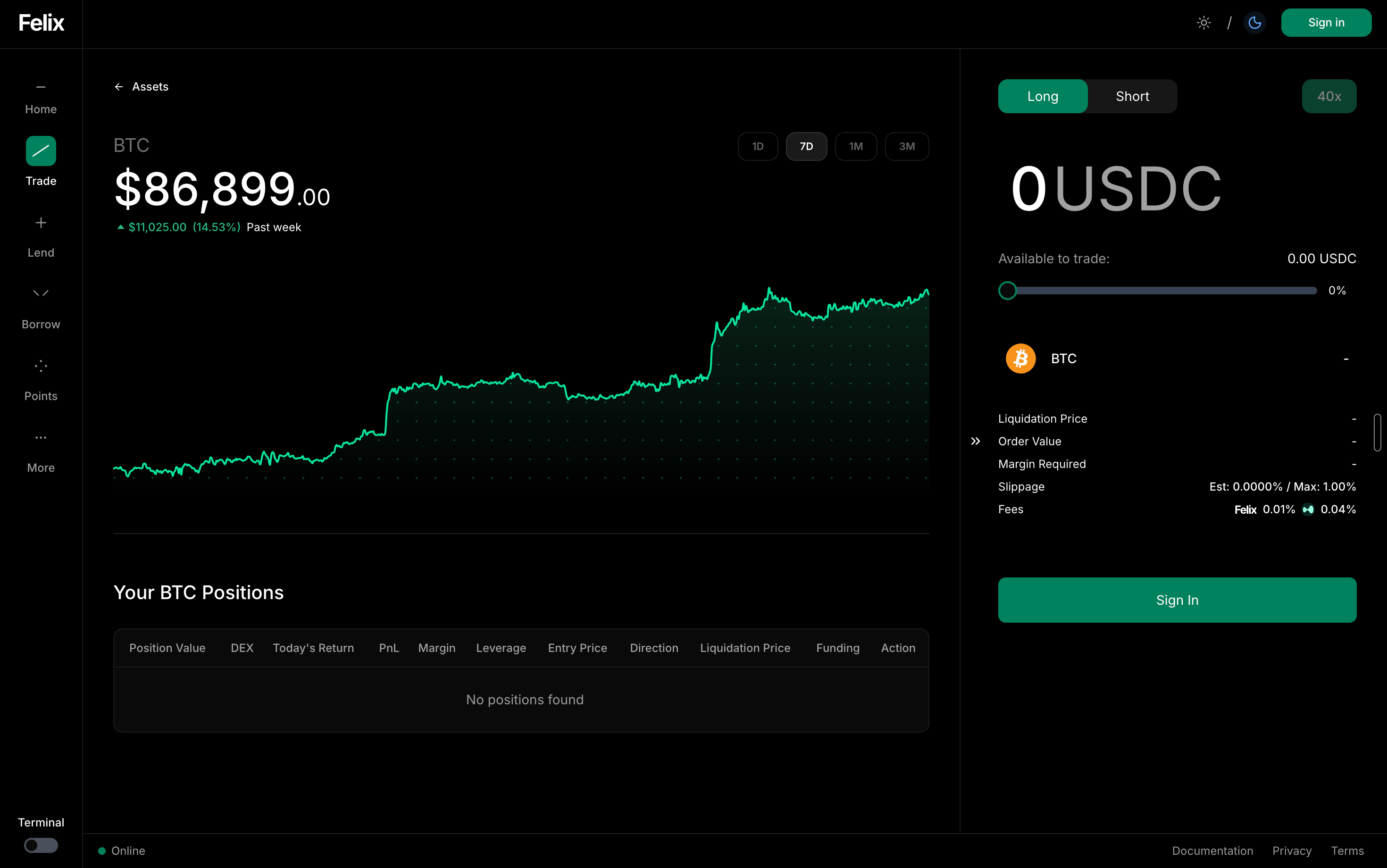
Felix's historical HIP-3 catalogue covered metals and energy, equities such as NVIDIA and Tesla, and selected crypto markets. The deployment used USDH collateral.
It accumulated $3.59B in all-time volume, but $0 in this 90D window. Felix’s official announcement scheduled the sunset for 19–20 June 2026, before this comparison period began.
FLX is no longer competing in the HIP-3 market-deployer space. That is a statement about its perpetual markets, not Felix’s other products.
Official announcement: Felix HIP-3 sunset notice.
In light of the USDH sunset, the Felix HIP-3 DEX and all live markets will begin sunsetting on June 19 and conclude on June 20. All traders are encouraged to close active positions before this time. Another reminder of this sunset will be sent in the Felix Discord and Telegram…
— Felix (@felixprotocol) June 8, 2026
#8: Ventuals: private-company valuations and thematic markets
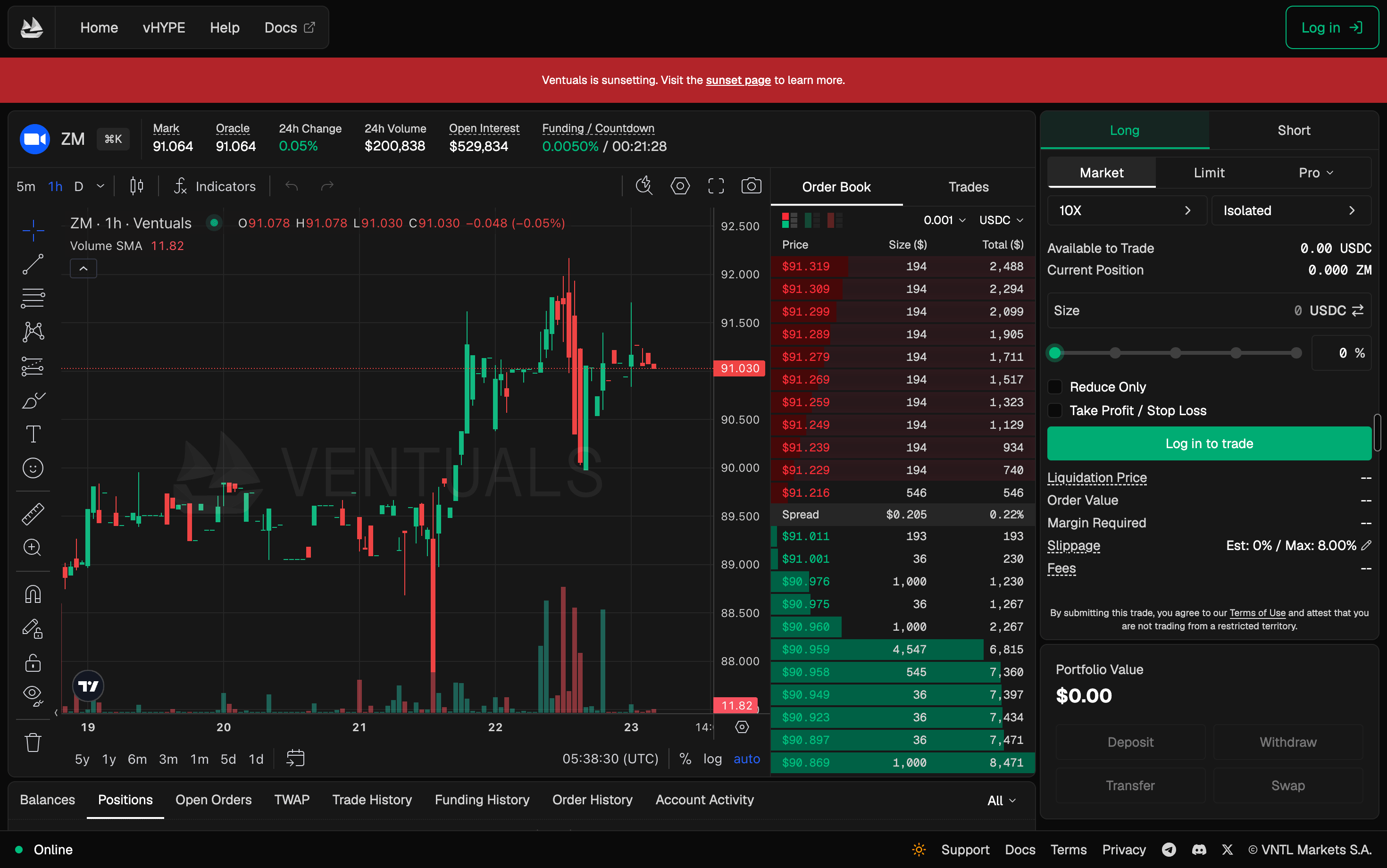
Ventuals focused on private-company valuations and thematic public-equity exposure. Historical listings included SpaceX, OpenAI and Anthropic, alongside technology-sector themes and agricultural commodities.
Its recorded all-time volume was $675.46M, with $0 in this 90D window. Its documentation now identifies the product as sunsetting, and all markets in the recorded deployment were delisted at the snapshot.
What the HIP-3 numbers tell us
TradeXYZ represented 97.64% of the tracked 90D volume. But an all-time ranking tells a different story: Dreamcash's historical total remained larger than those of Entropy, Kinetiq and Paragon, despite CASH having sunset.
The useful comparison is therefore not just “who traded the most?” It is which markets each team creates, whether those markets remain available, and what period the numbers describe.
A high all-time total does not prove current liquidity. A valuation perpetual does not confer equity ownership. Start with the market and its current status, then use volume to understand the activity around it.
For a closer look at liquidity, our BBO vs L2Book vs L4Book guide explains the difference between top-of-book quotes, price-level depth and individual orders.
To study activity over time, our Hyperliquid historical data page covers historical fills, candles and orderbook data.
Sources from Flowscan.xyz
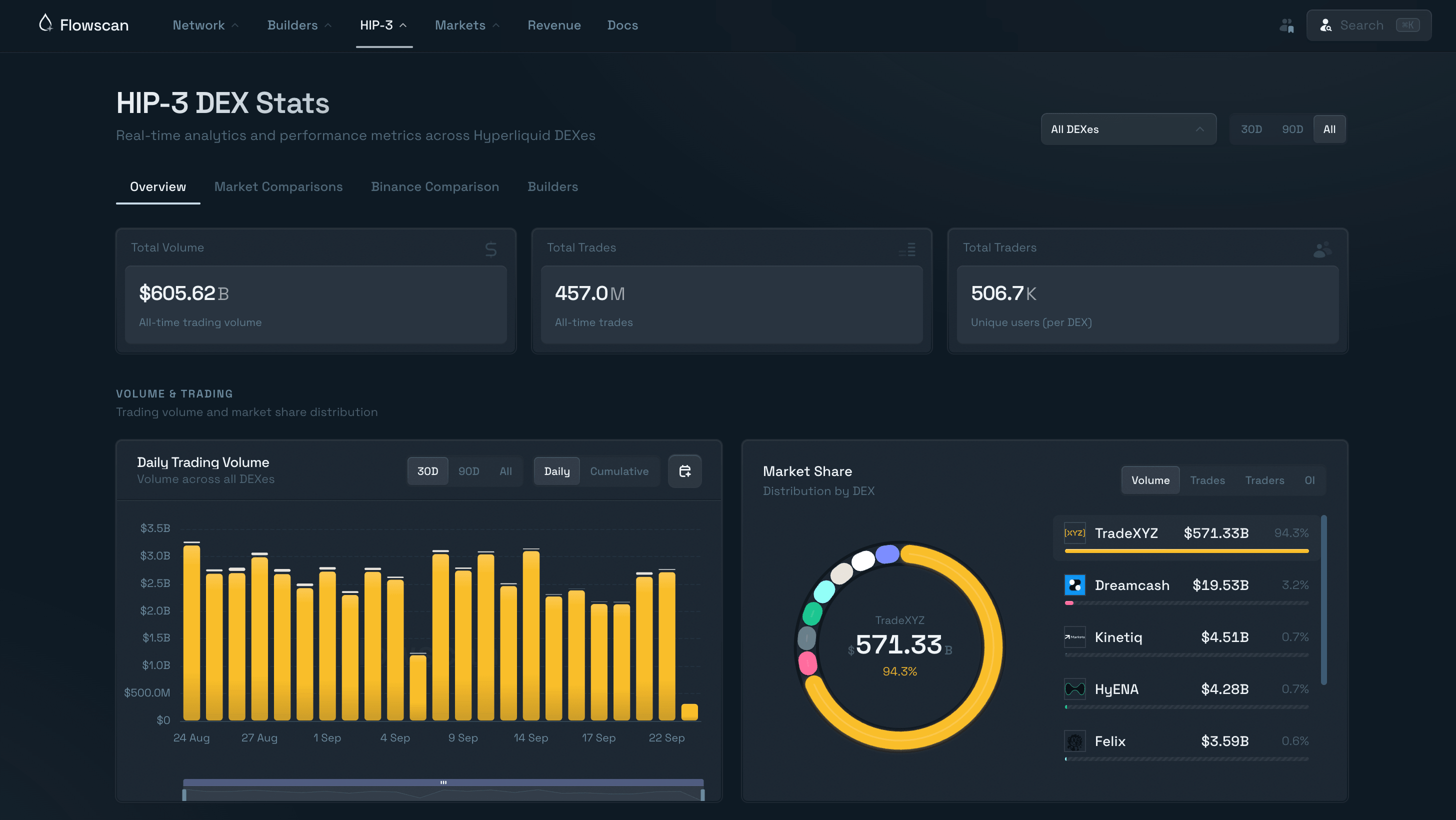
All trading volume data comes from Flowscan as of November 16, 2026. For more details on each HIP-3 deployer, explore Flowscan.
May the best deployers prevail!
Read next

Pump.fun on Hyperliquid: The First Four Weeks in Numbers
Pump.fun perps run on Hyperliquid. In four weeks: $457.6 million traded by 10,008 wallets, with Nvidia stock the second most traded market.

How Much of Hyperliquid Trades Through Third-Party Apps? October 2026 Edition
Apps built on Hyperliquid sent 12.4% of its trading volume in October 2026, the highest full month on record. See the monthly share and the apps behind it.

Hyperliquid API Latency by Region
We streamed Hyperliquid's BTC order book from AWS and Vultr servers around the world, from both the native API and Hydromancer. How fast? The data is here.