Top 12 Builders on Hyperliquid by Revenue
Explore Hyperliquid’s top 12 builders by all-time revenue, comparing builder fees, routed trading volume, and the products behind the numbers.
 JoshuaGrowth Lead
Phantom leads Flowscan’s all-time Hyperliquid builder-revenue ranking with $26.56 million. But the list covers more than wallet apps: trading terminals, Telegram bots and social trading products also appear among the top earners.
Across all builder entries in the snapshot, Flowscan recorded $112.59 million in revenue. The top 12 accounted for $82.49 million, or 73.26% of that total.
This article compares their recorded builder fees and the different ways their products connect traders to Hyperliquid.
What is a Hyperliquid builder?
In this context, a builder is an application that sends trades to Hyperliquid on a user’s behalf. Through builder codes, the application can receive a fee when those trades execute. Users approve a maximum builder fee and can revoke that permission.
That is different from creating the markets themselves. An app can give users access to markets operated by other teams; its builder revenue measures fees attributed to its trading interface, not the revenue of every market it displays. For the teams that create markets, see our HIP-3 deployer comparison.
Revenue here means the builder-fee amounts reported by Flowscan. It is not company-wide revenue, profit or money earned by traders. Routed volume is the value of trading activity attributed to the builder, not money deposited into the app.
Builders ranked by all-time revenue
Data snapshot: 2 October 2026.
Both revenue and routed volume below use Flowscan’s all-time leaderboard figures. “All-time” means the history captured by that source, not necessarily every transaction since a company was founded.
| Rank | Builder | All-time revenue | All-time routed volume |
|---|---|---|---|
| 1 | Phantom | $26.56M | $52.13B |
| 2 | BasedApp | $15.44M | $49.90B |
| 3 | MetaMask | $11.55M | $13.42B |
| 4 | pvp.trade | $8.05M | $17.29B |
| 5 | Insilico | $4.10M | $41.41B |
| 6 | Trust Wallet | $2.89M | $6.24B |
| 7 | Infinex | $2.82M | $5.61B |
| 8 | Axiom | $2.44M | $24.37B |
| 9 | Tread.fi | $2.39M | $12.43B |
| 10 | Rabby | $2.21M | $10.22B |
| 11 | fomo | $2.07M | $4.69B |
| 12 | Liquid | $1.96M | $4.61B |
Figures are rounded for display; the ranking uses unrounded revenue. The total across all builders includes unnamed entries as well as identified products.
Data note: Some individual builder-detail views return different totals. This comparison consistently uses the all-time leaderboard rather than mixing those datasets. The figures are source-reported totals, not an independently reconstructed audit of every trade.
#1: Phantom

Phantom brings Hyperliquid perpetual trading into its mobile wallet and Phantom Terminal. It began in 2021 as a Solana-focused wallet, with an early roadmap covering swaps, staking and mobile access.
Positions and balances carry across mobile and desktop when users sign in to the same account. Its mobile funding flow can convert SOL or other supported Solana tokens into USDC for a position.
Terminal combines Solana token trading with Hyperliquid perps on desktop, but supports market orders only; limit orders are available in the mobile app.
Perps are unavailable in the US, UK and regions subject to comprehensive US sanctions.
#2: BasedApp
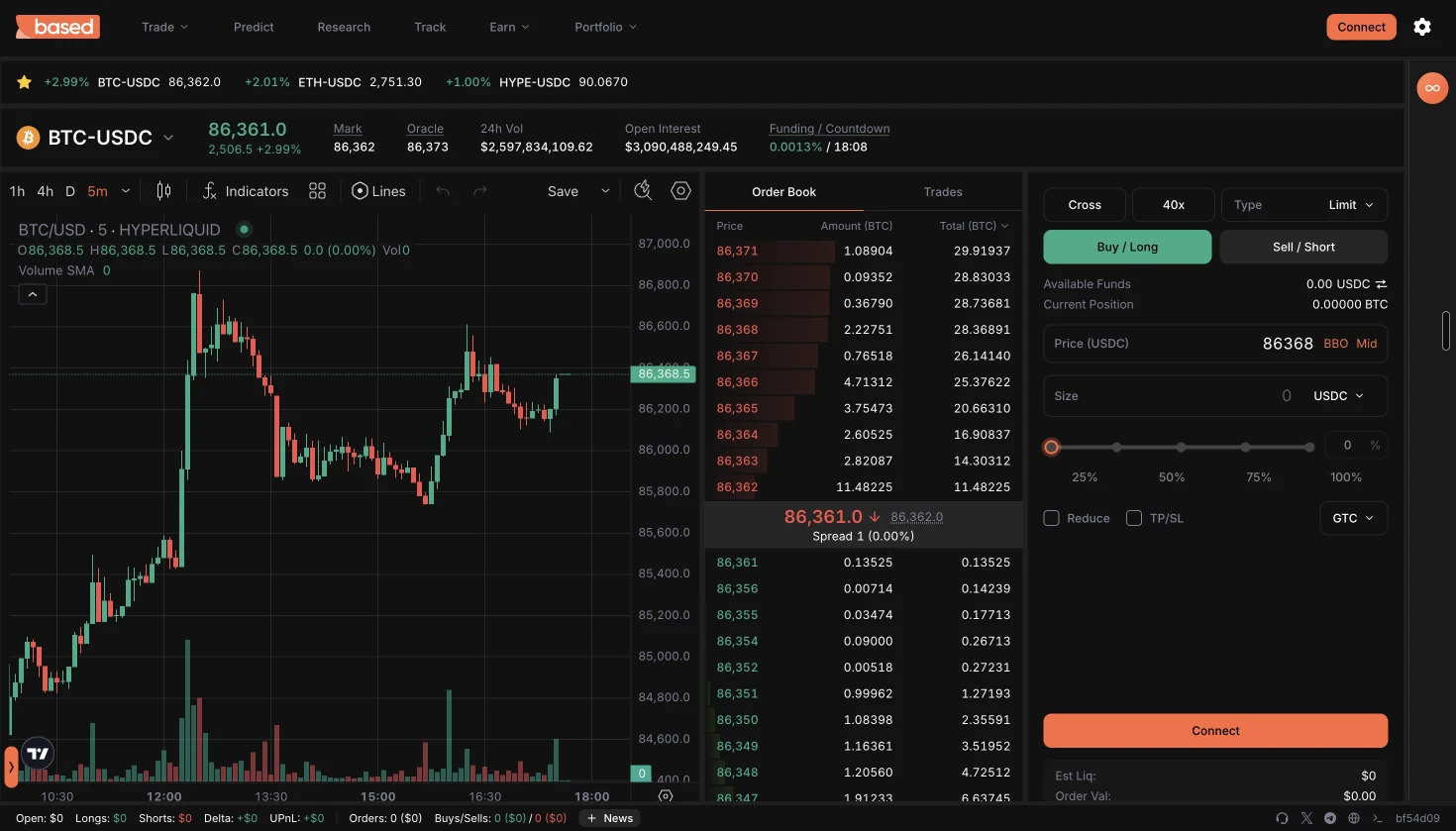
BasedApp combines crypto and stock perpetuals with browser and mobile trading tools. Its first version, released in September 2023, was a smart-contract wallet linked to a Visa debit card for spending crypto.
Its June 2025 HyperApp announcement broadened that focus to holding, trading and spending in one app. Its web terminal lets users connect several wallets and manage different strategies from the same interface.
The stock distinction matters: these contracts provide long or short price exposure, not ownership of shares, dividends or voting rights. Based describes itself as a wallet rather than a broker.
#3: MetaMask
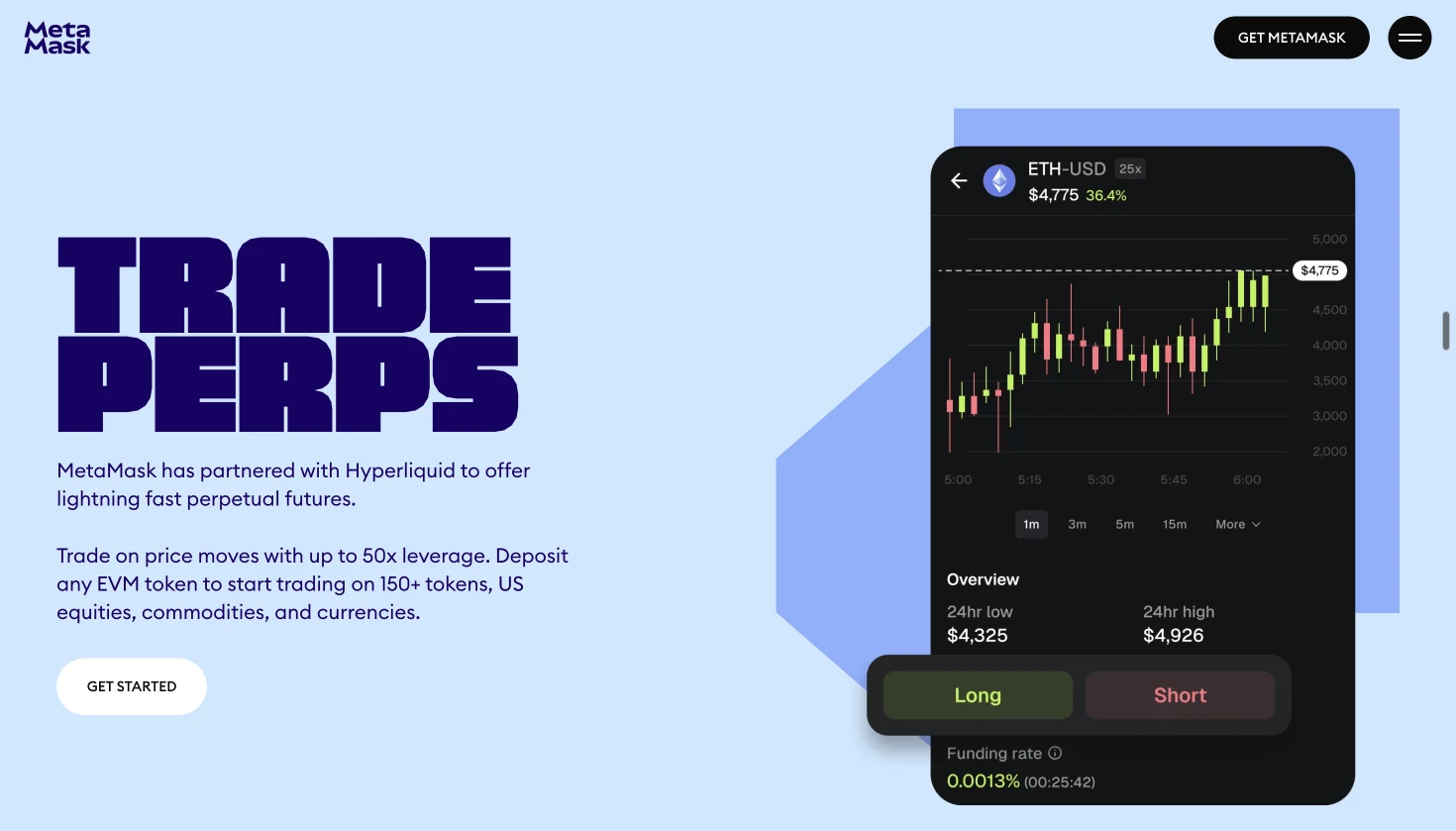
MetaMask offers Hyperliquid perps through its mobile app and browser extension. It began in 2016 as a self-custodial Ethereum browser wallet; perpetual trading is an addition to that wallet background.
On mobile, users can fund a position with supported wallet tokens and choose between a simpler Lite view and a Pro view with order-book data and advanced inputs.
Extension users must fund their perps balance before opening a position. Access is restricted in the US, UK, Ontario, Belgium and countries on the US sanctions list.
#4: pvp.trade

pvp.trade puts trading into Telegram groups, where members can share trades and compare open positions. It is built around a bot that users add to a group chat with friends, rather than a separate trading screen.
Its documentation includes connecting an existing Hyperliquid account and viewing another group member’s positions.
Copy and countertrade tools let users follow another trader’s direction or take the opposite side. The shared conversation is part of its trading interface.
#5: Insilico
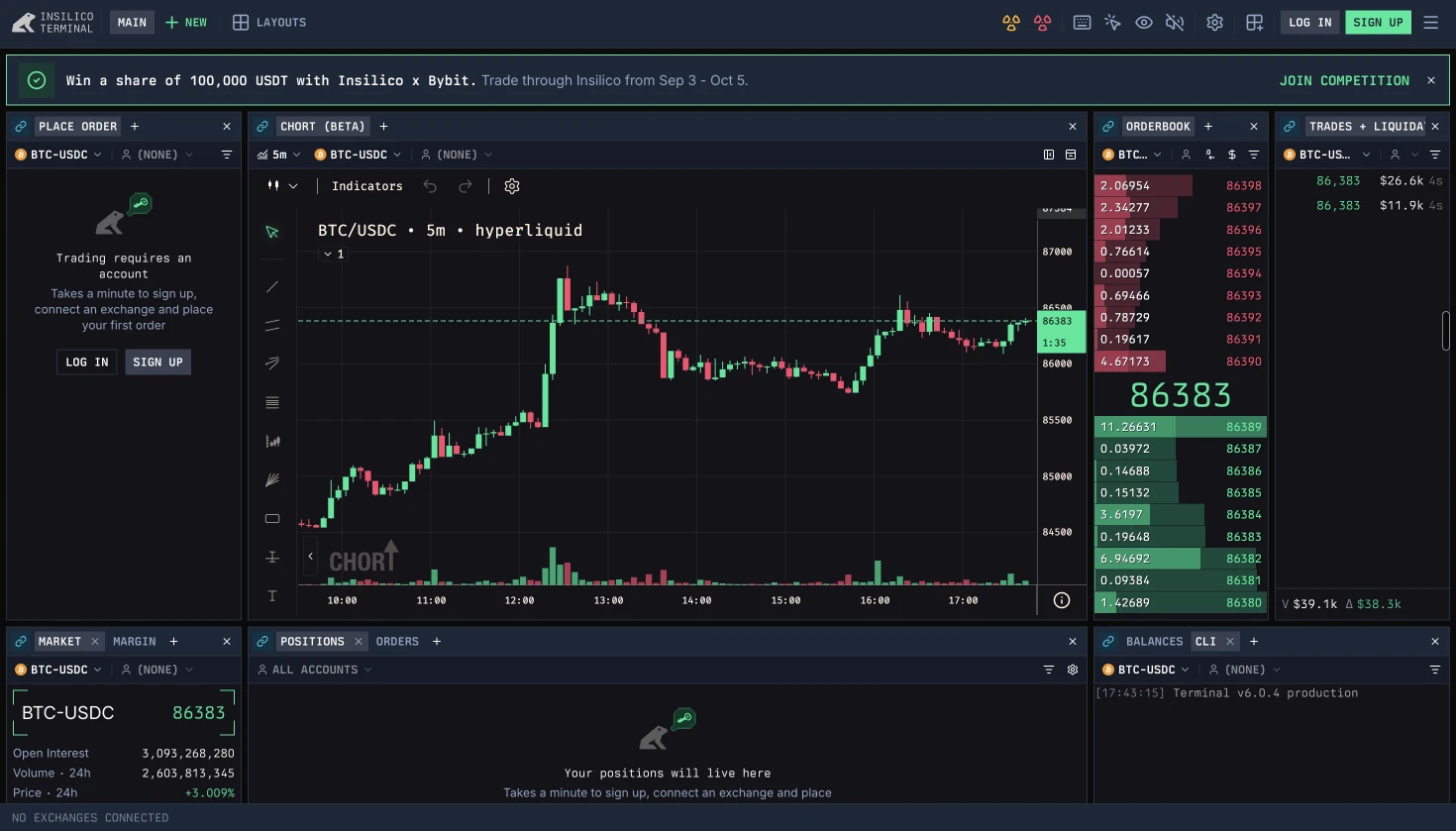
Insilico supports Hyperliquid perpetuals and spot alongside other trading venues. Its execution-tooling background reaches back to at least September 2022, when an update documented time-sliced orders and Binance order handling.
Its Multi mode lets traders arrange multiple chart tabs and other components rather than work within a single fixed layout.
Programmable hotkeys let users bind commands to keyboard shortcuts. Its distinction is control over the trading workspace and repeat actions, rather than a simplified wallet screen.
#6: Trust Wallet
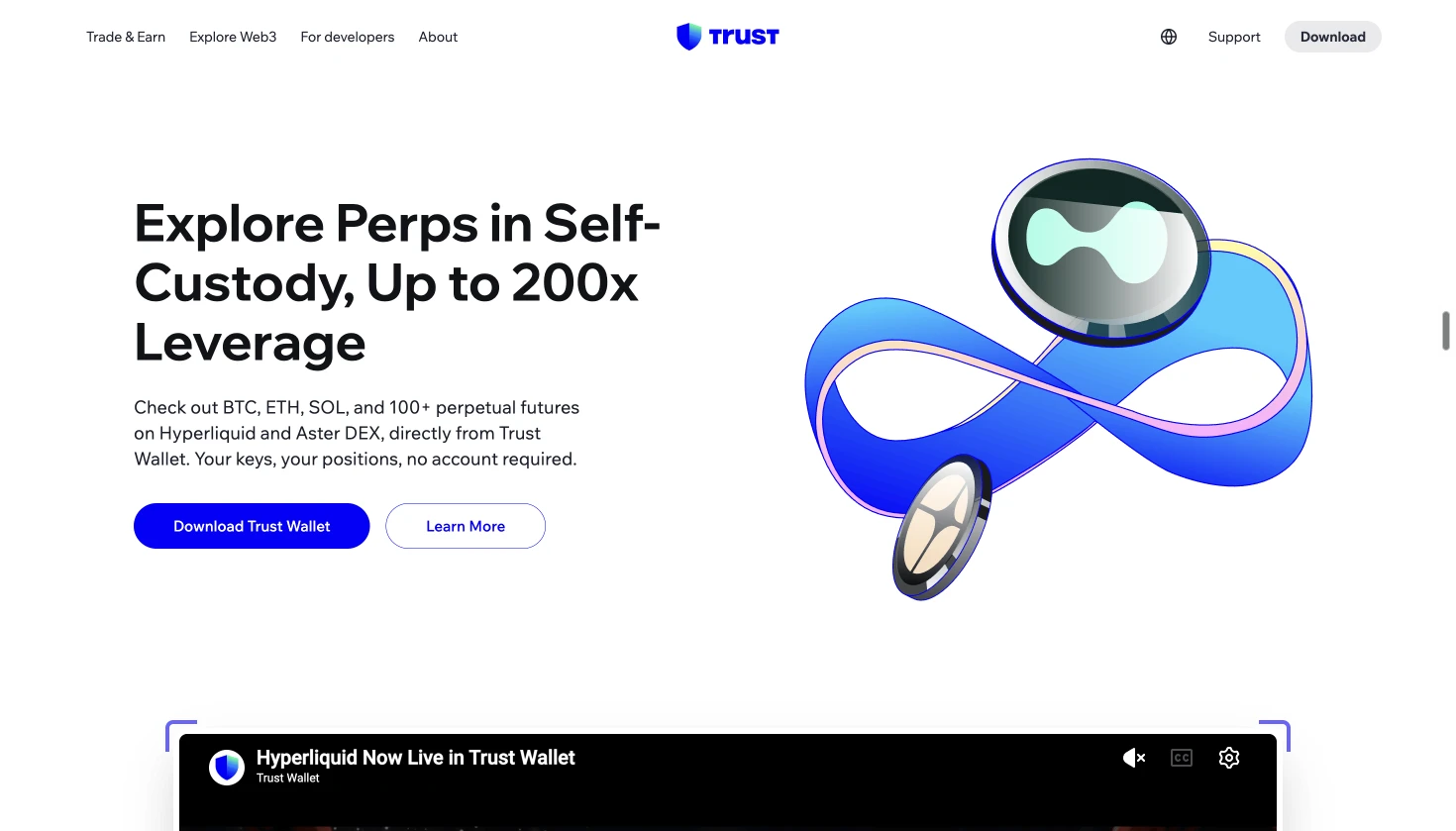
Trust Wallet supports Hyperliquid and Aster perpetuals inside its mobile wallet. It started in 2017 as a mobile wallet for Ethereum and tokens built on that network, before expanding its range of supported assets and features.
Users can select a market and open a long or short without moving to a separate trading app.
Its documented Perps funding flow accepts transfers from an exchange or another wallet, using the supported tokens and network shown in-app. Availability varies by region. Only the Hyperliquid builder entry contributes to this ranking, not activity on its other supported venue.
#7: Infinex
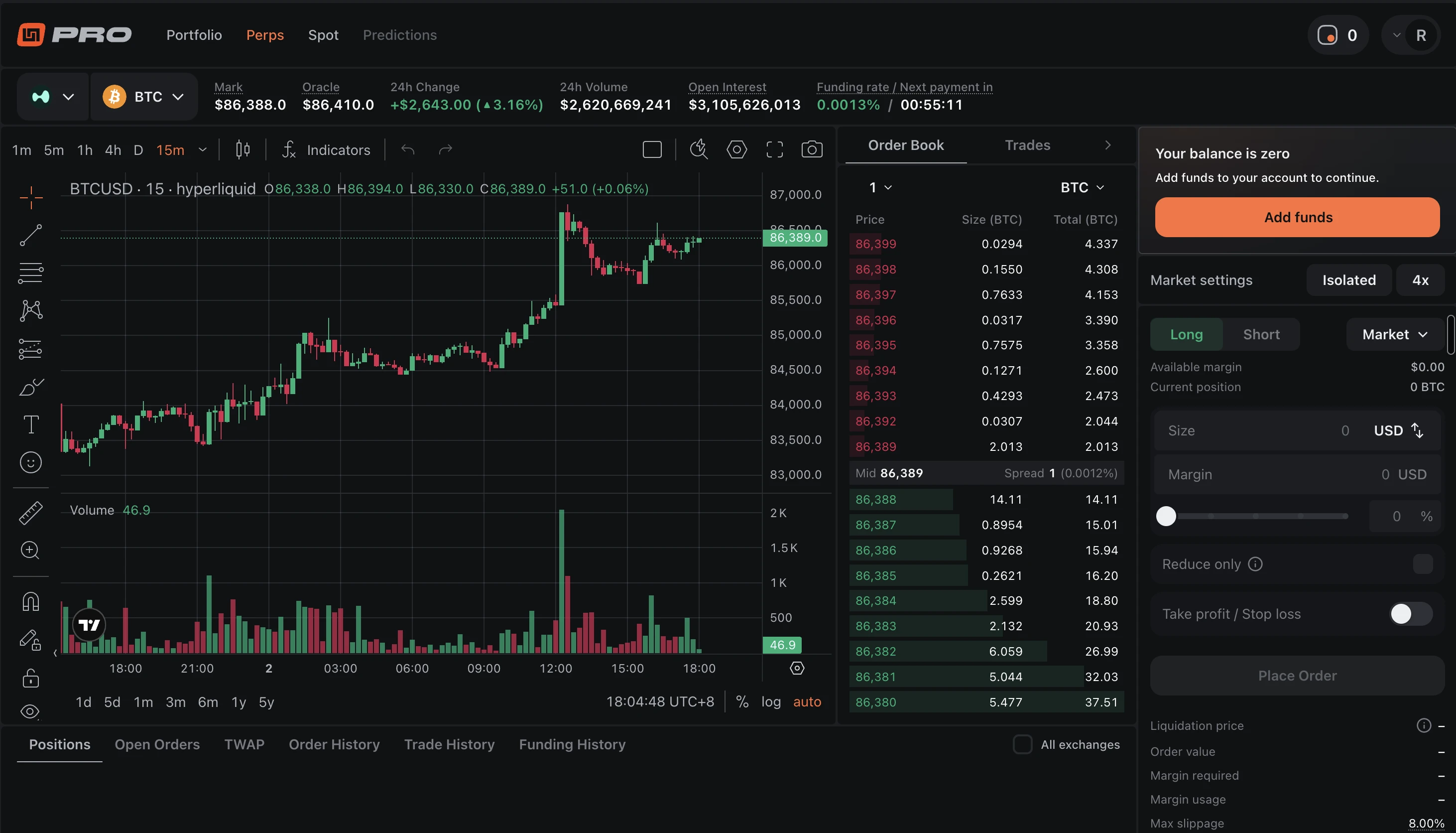
Infinex combines passkey login with a view of assets across multiple blockchains. Its account launched in May 2024 with a focus on making onchain products easier to access without learning transaction signing, gas or bridging.
The initial rollout opened USDC deposits, with protocol integrations to follow. Its perpetual-trading interface offers a choice of Hyperliquid or Lighter within the same Infinex account.
Swidge, its combined swap-and-bridge tool, helps users move funds into the USDC balance required for the selected venue.
#8: Axiom
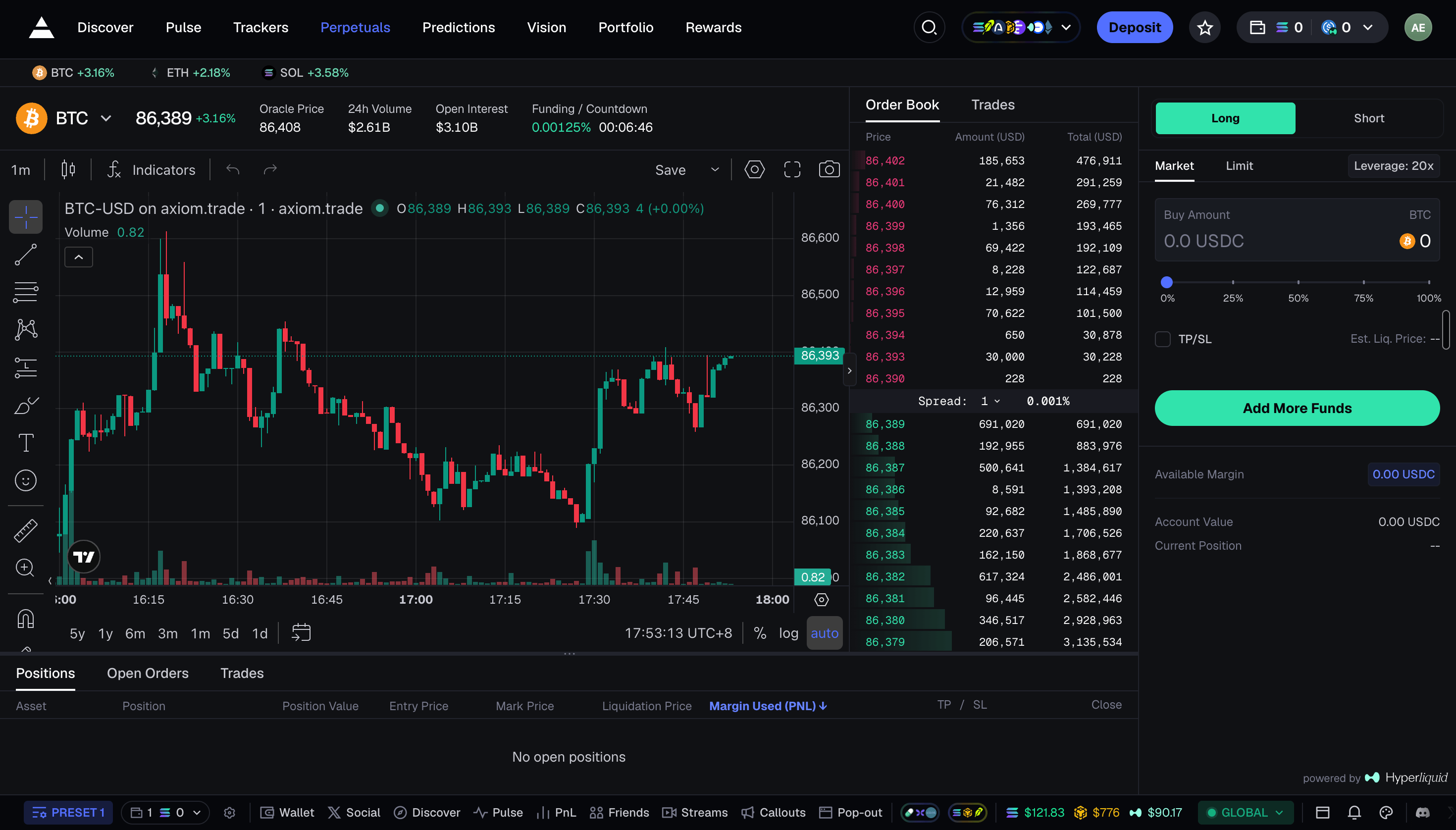
Axiom combines Solana token trading and discovery with tools for tracking wallets and buying or selling in one click. Its discovery tools organize new and trending tokens, with filters and watchlists for markets a trader wants to follow.
Hyperliquid perps sit in a separate part of that broader trading product.
Its documented funding flow converts SOL into USDC on Hyperliquid before users trade through the Perpetuals tab. The revenue in this comparison belongs to that Hyperliquid builder entry, not Axiom’s token-trading business as a whole.
#9: Tread.fi

Tread.fi connects traders to their existing centralized and decentralized exchange accounts through one trading terminal, including a documented Hyperliquid connection.
Its earlier focus was algorithmic trading infrastructure for institutional digital-asset traders, as described in its July 2024 funding announcement. It added Hyperliquid in February 2025.
Its algorithmic execution tools include TWAP, which splits an order into equal parts executed at regular intervals. That gives traders a way to work an order over a chosen duration rather than submit it all at once. This trajectory follows a set schedule rather than adapting its pace to market conditions.
#10: Rabby
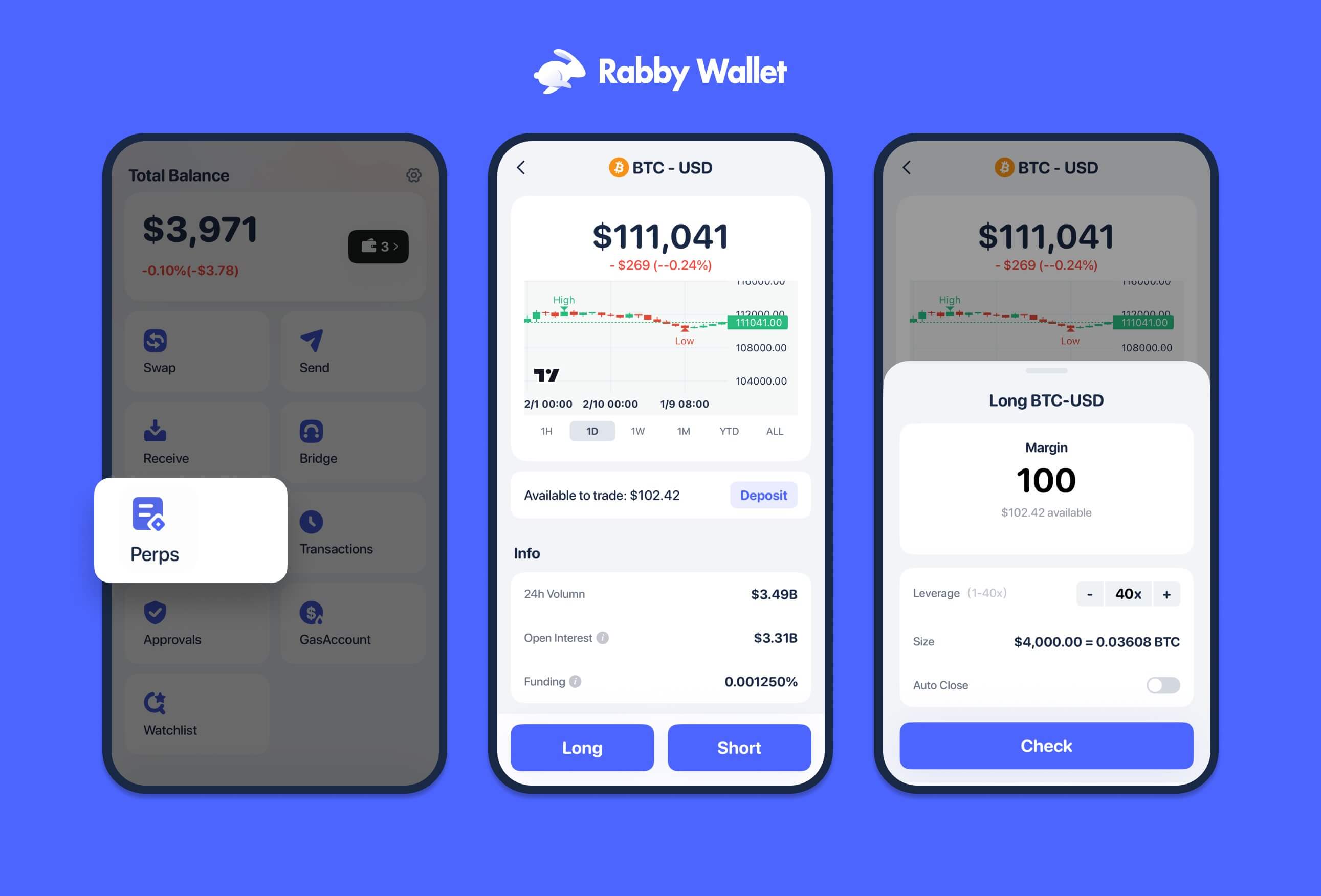
Rabby offers a Perps feature powered by Hyperliquid that lets users trade through the wallet interface. It launched in July 2021 as DeBank’s browser-extension wallet for DeFi users, with an early focus on multichain apps and showing expected balance changes and transaction risks before signing. It adds a trading function to the wallet rather than requiring a separate standalone terminal.
Rabby explicitly distinguishes its builder fee from the trading fee charged by Hyperliquid. That makes it a useful example of what this ranking measures: fees credited to the application, not every fee paid on the underlying venue.
#11: fomo
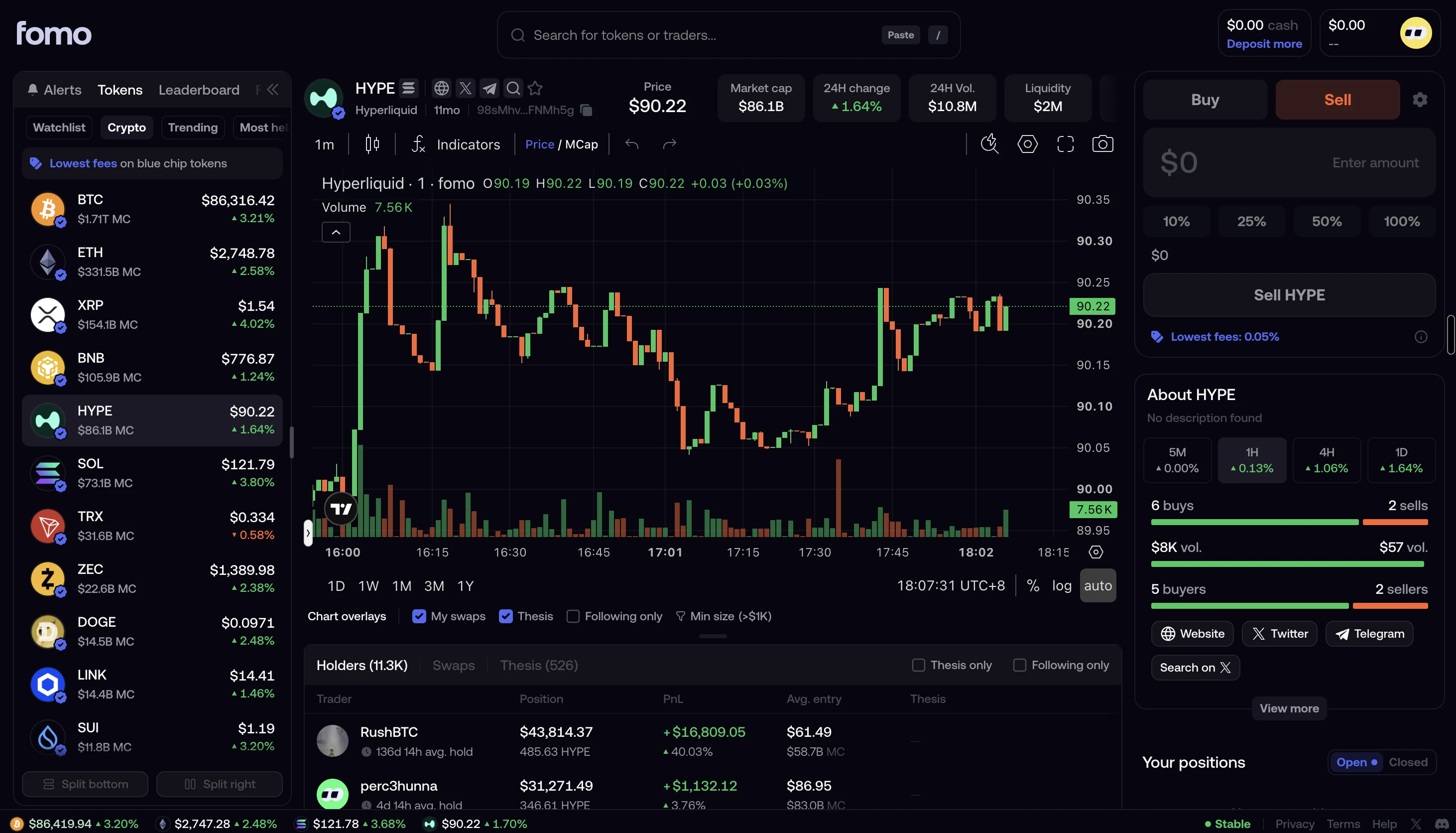
fomo combines perpetual trading with a feed, trader profiles and notifications when followed traders enter positions. Its earlier product focused on token trading and social discovery: by September 2025, it supported Solana and Base and a feed of followed traders’ buying and selling.
Hyperliquid-powered perps arrived in June 2026. Its perps are not available to US persons.
Flowscan categorizes this ranked entry as social trading. Its attribution to fomo.family rests on analytics rather than an official wallet declaration. Flowscan lists another similarly named FOMO entry separately; its fees are not combined with this one.
#12: Liquid
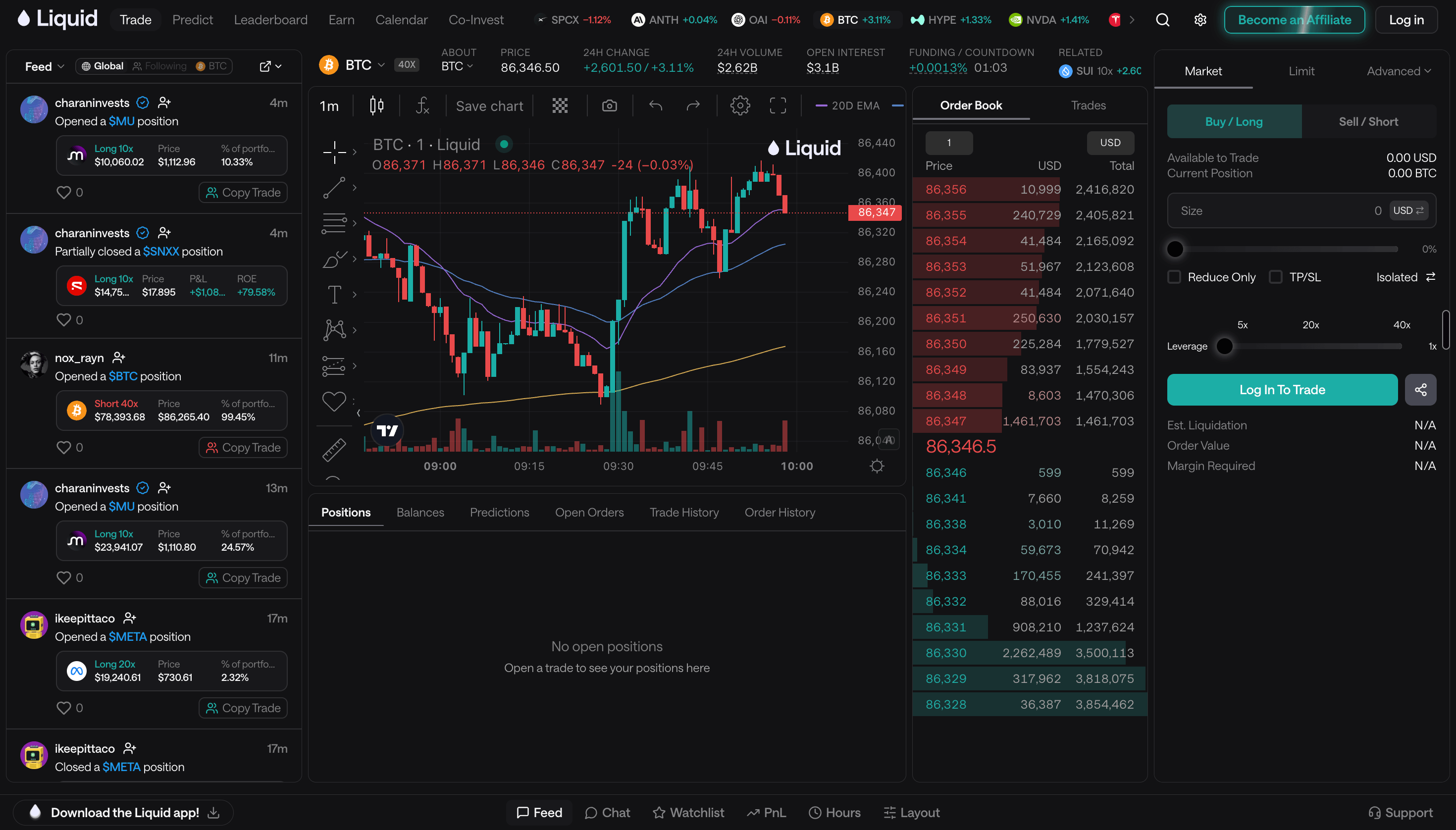
Liquid is a trading app that routes to external venues, including Hyperliquid. It was founded in 2025 by Franklyn Wang, formerly Chief AI Scientist of Macro at Two Sigma.
Its Co-Invest tool connects market research to trade proposals through an AI assistant.
In assistant mode, users must confirm proposed trades. Its separately documented Computer mode supports automated strategies within user-defined limits, so the confirmation requirement should not be treated as a rule for every Liquid workflow.
What the builder numbers tell us
Wallets have a substantial presence in this ranking. Phantom, MetaMask, Trust Wallet and Rabby together recorded $43.21 million, or 52.39% of the top 12’s combined revenue. The list is not limited to specialist trading terminals.
Revenue and volume also produce different orders. MetaMask recorded $11.55 million in revenue on $13.42 billion of routed volume, while Insilico recorded $4.10 million on $41.41 billion. More routed volume does not automatically mean more builder revenue.
The products give traders different ways to reach Hyperliquid: a wallet balance, a configurable terminal, a group chat or a social feed. Their recorded fees show the scale of their Hyperliquid builder-fee activity, but do not by themselves establish which product has the best execution or is the best fit for a particular trader.
Out of all of the twelve, which one would be your go-to for trading, we wonder?
Sources from Flowscan.xyz
All ranking and volume figures come from the saved Flowscan builder leaderboard snapshot dated 2 October 2026. The ranking uses all-time revenue, regardless of the shorter-period filters in that link. Product descriptions were checked against official product pages and documentation; supporting evidence is retained in the separate fact-check companion.
Read next
Hyperliquid RPC vs Data API: Which is best for you?
Learn when to use Hyperliquid RPC, the official API, or a dedicated data API.
Read ↗
Top Prop Firms on Hyperliquid: Side-by-Side Comparison
A side-by-side comparison of PROPR, Hypernova and Iceberg, covering account fees, trading tools and payout rules, with observations from using all three.
Read ↗
Top 5 Prediction Market Platforms built on Hyperliquid
The top five prediction market platforms built on Hyperliquid are Outcome, Share, Trade[XYZ] Events, Skew and Liquidiction.
Read ↗